
Epoxy commercial kitchen flooring
Epoxy commercial kitchen flooring is one of the most practical and effective solutions for businesses in the food service industry, and its installation process plays a crucial role in delivering its long-lasting performance. Unlike traditional flooring methods that may involve grout lines or seams, epoxy creates a seamless surface that is both durable and hygienic. The installation is carried out in carefully planned stages to ensure the floor can withstand the constant challenges of a busy kitchen environment. Business owners not only gain peace of mind with this flooring option but also benefit from a surface that is easy to maintain, safe, and tailored to the specific needs of their kitchen operations.
The first step in installing epoxy commercial kitchen flooring is preparing the substrate, usually made of concrete. Preparation is essential to achieve proper adhesion, and it often involves cleaning, grinding, or shot blasting the surface to remove dirt, oils, and any previous coatings. This process opens up the pores of the concrete, creating the ideal base for epoxy to bond strongly. Any cracks, chips, or damaged areas are repaired to ensure the surface is smooth and stable. A properly prepared substrate is the foundation of a successful epoxy installation, as it prevents peeling, bubbling, or other issues that could compromise the floor’s durability over time.
After preparation, the installation moves to applying the primer coat, which is designed to penetrate the concrete surface and promote maximum adhesion. The primer also helps seal the surface, minimizing the risk of bubbles caused by air escaping from the substrate. Once the primer has cured, the base coat of epoxy is applied. This is the layer that begins to form the seamless, non-porous surface that Epoxy commercial kitchen flooring is known for. The base coat can be customized in terms of color and finish, allowing businesses to create a flooring system that not only performs well but also looks professional and appealing in their kitchen spaces.
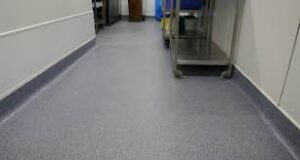
How is epoxy commercial kitchen flooring installed?
To address safety requirements, a slip-resistant aggregate can be incorporated into the epoxy system during installation. High Performance Systems specializes in customizing slip resistance by understanding the specific processes and work areas of a commercial kitchen. For example, in a fryer area where grease is frequently present, a higher level of aggregate can be added to increase traction and reduce the risk of slips and falls. This tailored approach ensures that every part of the kitchen floor meets the unique safety demands of its environment, providing employees with a secure workspace while protecting business owners from costly workplace accidents.
The final step of installing epoxy commercial kitchen flooring involves applying a topcoat, which enhances the durability and protective qualities of the floor. This top layer resists stains, chemicals, moisture, and heavy impacts, making it particularly well-suited to kitchens where spills and high traffic are constant. Once the topcoat has cured, the result is a smooth, glossy, and seamless surface that is easy to clean and maintain. The curing process is vital, as it ensures the floor achieves its maximum strength and long-lasting performance. Depending on the size of the project, the entire installation can often be completed within a few days, minimizing downtime for the kitchen.
In the end, the installation of epoxy commercial kitchen flooring is a process that combines preparation, customization, and expert application to create a floor that can withstand the toughest demands. From seamless design and easy cleaning to slip-resistant customization and superior durability, every stage of the installation is designed to deliver peace of mind to business owners. By investing in epoxy, kitchens not only gain a reliable flooring solution but also improve safety, efficiency, and hygiene, ensuring they are prepared to meet both operational demands and health standards for years to come.