
Materials Used in HDI Board Construction
The construction of high-density interconnect (HDI) PCBs involves a meticulous process, resulting in high-quality electronic devices that can meet the demanding requirements of today’s advanced technology. From the dielectric and copper layers to the solder masks and silkscreen, each layer plays an important role in ensuring that the final product meets all specifications. In this article, we will explore the most common materials used in HDI board construction, from substrates to copper, as well as solder masks, surface finishes and more.
The first step in the construction of a PCB is the layout design, which involves placing components on the board and routing the electrical connections. This requires careful consideration of signal integrity, power distribution and thermal management. After the layout has been designed, a series of files is generated, including Gerbers, which contain the details of each layer of the circuit board. These files are then sent to a manufacturer for fabrication. After the board has been fabricated, it is subjected to rigorous testing to ensure that all the connections are secure and that there are no open or short circuits. Once the board has passed these tests, it is ready for assembly.
One of the most important factors in achieving excellent performance for a PCB is the selection of the substrate material. This is particularly crucial when manufacturing HDI PCBs, which require thinner layers of insulating dielectric to separate the copper traces. This type of substrate must be able to withstand mechanical stress, as well as temperature and humidity fluctuations.
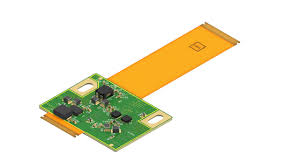
Common Materials Used in HDI Board Construction
For this reason, many manufacturers use FR-4, a composite made of woven fiberglass cloth and epoxy resin binder. While FR-4 is an excellent choice for most standard applications, HDI PCBs often require higher performance materials. For example, PTFE and reinforced PTFE have superior dielectric properties and chemical resistance. In addition, they have low losses at RF frequencies, making them ideal for high-speed signal transmission.
When selecting the appropriate substrate, it is also necessary to consider the conductivity of the copper layer. In general, thinner copper is better, as it can help reduce loss and signal degradation. However, it is important to note that this may increase the production cost of the circuit board. Therefore, it is critical to consider the overall budget and performance requirements when selecting a materials for hdi board.
Other considerations when choosing the proper material include its thermal expansion and its ability to handle the stresses of heat cycling. For this reason, many manufacturers use polyimides or other advanced materials for the core and substrate layers. In addition, it is a good idea to select a material with a low dielectric constant to minimize crosstalk between adjacent signals. Lastly, the best dielectric material for HDI PCBs should have a low loss tangent and a low dispersion index. This will help to maintain signal integrity and ensure that the eye pattern remains clear. This is especially important when using a high-speed signal on an HDI PCB.


