
PCB Board Fabrication
Surface finish plays a critical role in PCB board fabrication. The type of finish used determines the overall quality and reliability of a circuit board. It prevents copper from oxidizing before components are soldered to it, and ensures that the copper connections will maintain their integrity throughout the circuit board’s lifespan. There are various types of surface finishes, and each one has its own advantages and disadvantages. The best one for your application depends on many factors, including cost, environment, component selection, shelf life, and production volume.
Leaded solder is the oldest of these surface finishes and remains a popular choice due to its low cost and availability. This finish is applied by immersing the circuit board in a mixture of tin and lead, and then using a hot air knife to level off the surface. Although this method offers a cheap and comprehensive coating, it has several drawbacks. First, it requires high temperatures during assembly, and it can deteriorate over time. Second, the tin-lead mixture contains toxins that can pose a threat to environmental sustainability.
Alternatively, you can use a RoHS-compliant finish like immersion silver to protect your copper layer from oxidation. This flat finish has a reasonable cost, and it is suitable for a wide range of applications, including fine-pitch components and faster signal speed. However, it tarnishes easily in air exposure, and must be packed in anti-tarnish packaging to preserve its integrity.
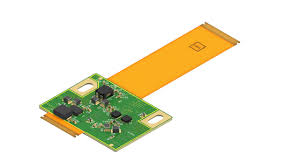
What Finishes Are Common in PCB Board Fabrication?
Other finish options include electroless nickel and immersion gold. These finishes are suited for pcb board fabrication that require wire bonding. The electroless nickel acts as an anti-oxidation agent, while the gold layer provides additional corrosion protection and enhances conductivity. This combination also offers enhanced flexibility for aluminum wire bonding. This type of finish is commonly used for applications ranging from low-end consumer products to high-frequency server circuit boards.
Another common finishing process is laser direct imaging (LDI). In this technique, the circuit board is placed in a machine that scans it with a laser, creating a digital image that matches a CAD/CAM design file. The machine then uses this image to create a negative that is bonded to the board’s copper layers with an epoxy resin. The positive image can then be etched in preparation for soldering.
After material preparation, the copper layer is etched to define the circuit traces. This step typically employs a photolithographic process. A photoresist material is applied to the copper-clad board, and the circuit pattern is projected onto it using UV light. Areas exposed to light harden, while unexposed areas remain soluble and can be removed. The exposed copper is then etched away using chemicals, leaving behind the desired circuit pattern. Advanced methods like direct laser imaging are also used for higher precision in complex designs.
Other types of PCB surface finishes include HASL, ENIG, and OSP. HASL is the most inexpensive and widely available finish. It’s suitable for through-hole components, and its flat surface is useful in fine-pitch applications. It can be susceptible to creep corrosion, which can occur in humid, sulfur-rich environments, so it’s often used in higher reliability applications. Similarly, immersion silver can be prone to whiskers, which are metallic structures that form on the surface of the finish. However, this can be reduced by the use of anti-migration agents.